Illusion of the Villain Archetype in Rebbeca
Written by Sinta MK
"Last night I dreamed I went to Manderley again."
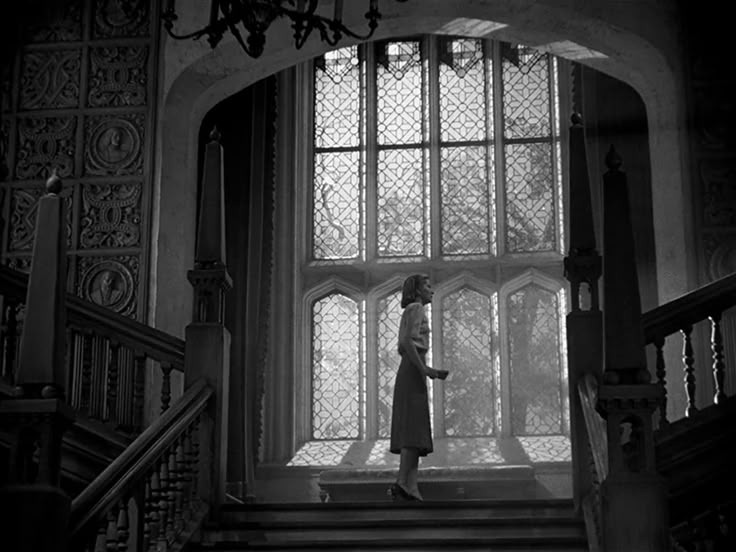
Longing, emptiness, and despair are intertwined in that infamous opening line. Rebecca is more than a tale about dark romance. It explores the themes of trauma and the lingering past. Narration from the nameless protagonist took us back to the grandiose Manderley, an allegory of beauty as a facade. Not only is the estate shrouded in mystery, but its dwellers also haunt the narrator with secret after secret. From Maxim de Winter, the husband of the narrator, with his enigmatic personality. Mrs. Danvers, the household caretaker, whose eyes emit intimidation. And Rebecca, the late-deceased wife of Maxim, the key to every secret in Manderley.
The narrator, now the second Mrs. de Winter, has to compete with Rebecca, even in her absence. Her presence still lurks in her china porcelain, or in Mrs. Danvers' reverence for the first Mrs. de Winter. It drives her mind to form an unconscious notion about who Rebecca is. Mrs. Danvers warns that the glory of the deceased wife will never be equal to the narrator’s plain self. She convinces her that Maxim can never love her the same way as Rebecca. And Maxim's distant gaze as though confirms it all — his lack of explanations strengthens her insecurity. Eventually, she drowns further in her illusion.
The ghost of Rebecca is gnawing at the intimacy between the narrator and Maxim. The situation that the second Mrs. de Winter goes through symbolizes a void that often comes with marital life. There is no foundation built upon mutual trust and transparency in their marriage. The narrator is clueless, having to bear the pressuring household from many sides. Jealousy and emotional turmoil fill most of her days in Manderley. All the while, Maxim is too aloof to sense her second wife’s needs. His neglect allows her to create a war inside her mind. He hardly sees her as an equal partner, always speaking to her authoritatively. With Maxim continuing to tease her as though she were a child, she suffers the need to be acknowledged as the congenial companion to Maxim.
The second Mrs. de Winter feels inadequate when compared to Rebecca's "breeding, brain, and beauty". Unlike Rebecca's lustrous black hair, her blonde bob is kept untidy. She starts clumsily in her role as the head of the household. Her hobby is biting her nails when anxious. She doesn’t come from an upper-class family, dreaming to become "a woman of about thirty-six dressed in black satin with a string of pearls”, just like Rebecca. She believes people will finally recognize her worth by becoming an alluring being. Meanwhile, Rebecca effortlessly has a duality of charisma: a magnetic femininity and a strong masculine power. Manderley became infamous due to her aesthetic influence. Although it was an act, her performance grants her the “perfect wife” image in the public's eyes. With all these remarkable qualities, Rebecca has no fear of anything, except for two things: becoming sick and old.
“I wish I was a woman of about thirty-six dressed in black satin with a string of pearls.”
— The second Mrs. de Winter.
Like Jane Eyre, Rebecca alludes to the derogatory term about mad women. The label "crazy" is often attached to women due to a misconception that they are more spontaneous. This stereotype also exposes a hypocrisy where women are liable to more scrutiny than their male peers. Rebecca’s adultery and deception are enough to deem her a mad villain, yet Maxim’s crime goes unpunished, even protected. He manipulates the tragedy to justify his killing, believing himself to be the true victim. Not only did he fail to find resolutions for his past, but he also dragged her new wife into the intricate problem. His marriages also reveal how he views women solely as an adornment. He buys into the idea that it is a wife’s role to serve actively, instead of making it a mutual effort. It’s only after getting cornered that he starts appreciating the narrator’s presence, mainly to earn her support during his confession. But Rebecca, as awful as she was, has a strong sense of ownership in a male-dominated world.
She outpowers men in mind games, challenging the unconventional stereotype. Without Maxim’s intervention, she thrives in enhancing Manderley, while the second Mrs. de Winter struggles as a “dutiful, understanding wife.” Rebecca also used marriage as a way to ascend a higher social status, and ultimately, to survive in a patriarchal society. There are very few reliable facts when Maxim frames Rebecca through his lens. We never truly knew if she had other wickedness apart from her sexual promiscuity and masquerade, to earn murder as a punishment. Or if Maxim has a side no one knows but Rebecca, that pushes her loyalty away.
Maxim’s anger at his trampled dignity is just. Manderley doesn’t just represent his only power, but also the place he calls home. He has the utmost right to protect something his ancestors bequeathed him. Bearing shame and sacrificing his honour, he puts Manderley before anything else. And if we take his accounts at face value, he is patient enough to tolerate his first wife’s infidelity. But seeing Rebecca as his real enemy is almost strange: it is the society that allows itself to meddle in their affair. Maxim knows how scandalous their divorce will be, claiming “that there would be too much suspicion, too many rumors.” Even as an aristocratic man, Maxim’s privileges are powerless in front of societal norms.
On the other hand, it remains a mystery that Maxim presents Rebecca as ‘vicious, damnable, rotten through and through…”. Whether it reflects his own qualities or facts about Rebecca, we may never know. In the ending, Mrs. Danvers confesses that Rebecca had always hated all men, including Maxim de Winter. Rebecca is an independent woman, in a malicious way. It doesn’t seem a fair move for Maxim to acknowledge Rebecca’s "mastermind" wit by committing her murder. For someone like Maxim, the act is too amateur and shallow. He could have raised himself above her level to take her down. But instead, he takes her bait, losing the game. And once again, Rebecca proves to be a more formidable figure than a man like Maxim.
The narrator’s decision to remain faithful in the marriage is far from a happy ending. Trauma binds them together. Her longing for Manderley leads her to forget Maxim's abuse. Relying on nostalgia, the second Mrs. de Winter determines to continue their scarred relationship. Inevitably, she has already formed a profound attachment to Maxim, not to abandon him. She is equally traumatized as Maxim, yet still ends up doing the emotional labour. With his short-temper, Maxim’s domestic violence may recur in the future. And as a fellow woman, I can only hope that he loves her right through the years, even though one day she will look so much older, as "a woman of about thirty-six...”.
As the novel ended abruptly, I discovered that the iconic opening lines and ending are still linked with each other. As if to fill in the missing pieces in the epilogue, the first two chapters of Rebecca serve as a complete conclusion. For me, “Last night I dreamt I went to Manderley again” serves beyond a story introduction. It proves to be the real ending to Rebecca: the numbness to move on from the past. []
0 Comments Add a Comment?